Book a Workshop
Articles Tagged with

#economy

Home / #economy
Clients

2024 Q4 Market Update

Photo by Kharl Anthony Paica on Unsplash


As we enter the final quarter of 2024, global economic conditions continue to evolve, with central banks adjusting their policies to balance growth and inflation. This update examines recent developments in Canada and the United States, along with their potential impacts on various asset classes.

Macro Update

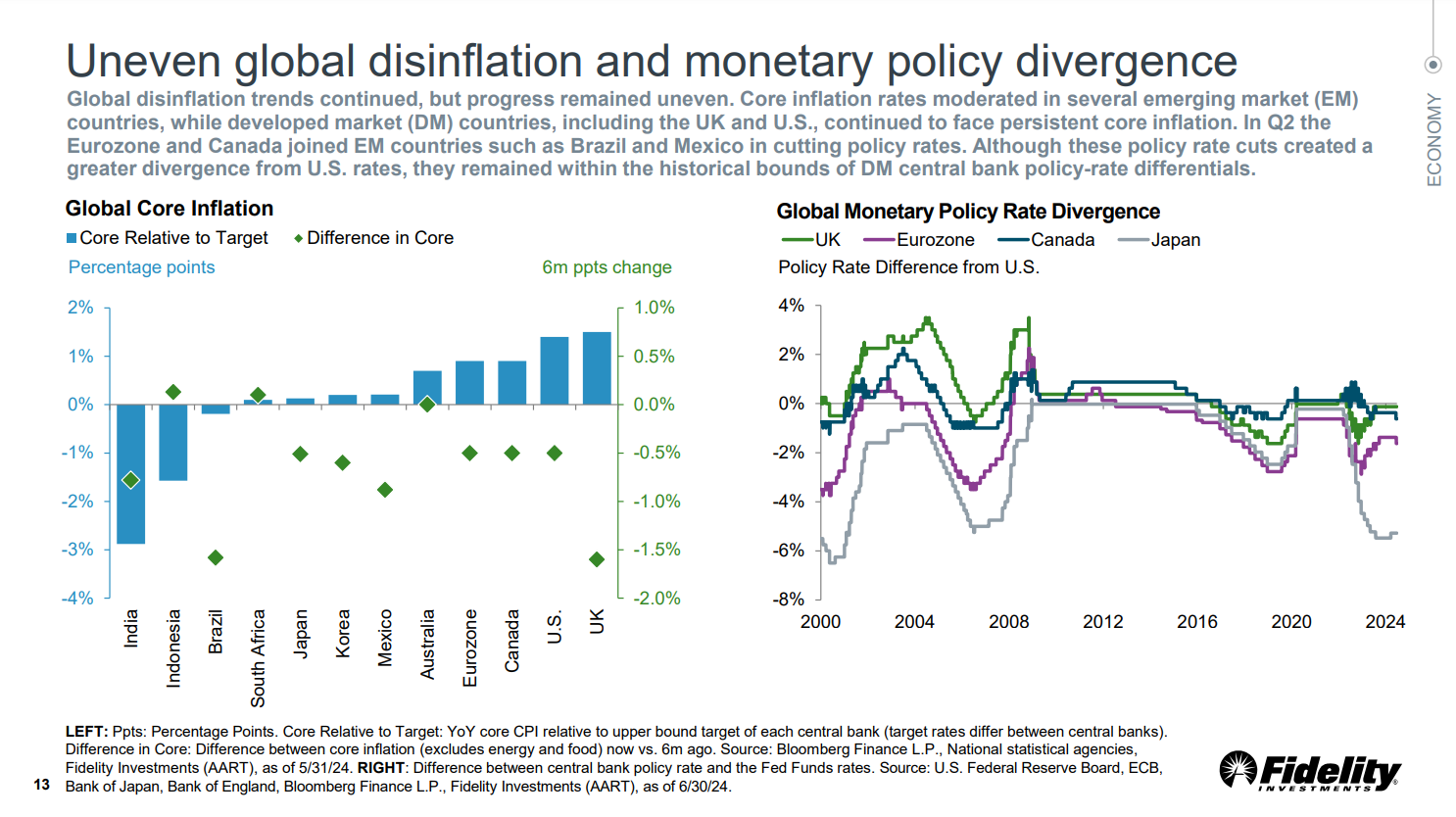
The Bank of Canada continued its easing cycle on October 23, 2024, reducing the policy rate by 50 basis points to 3.75%—its largest cut this year. Canada’s CPI has fallen to 1.6%, below the 2% target, with core inflation now under 2.5%. While growth remains modest and the labour market soft, excess supply and lower global oil prices are helping ease inflation, though shelter costs remain significant.¹

Looking forward, the Bank projects growth at 1.2% in 2024, increasing in 2025, with inflation expected to stay near 2%, keeping costs manageable for Canadians. The lower interest rate should gradually support growth in consumer spending, housing, and business investment.¹

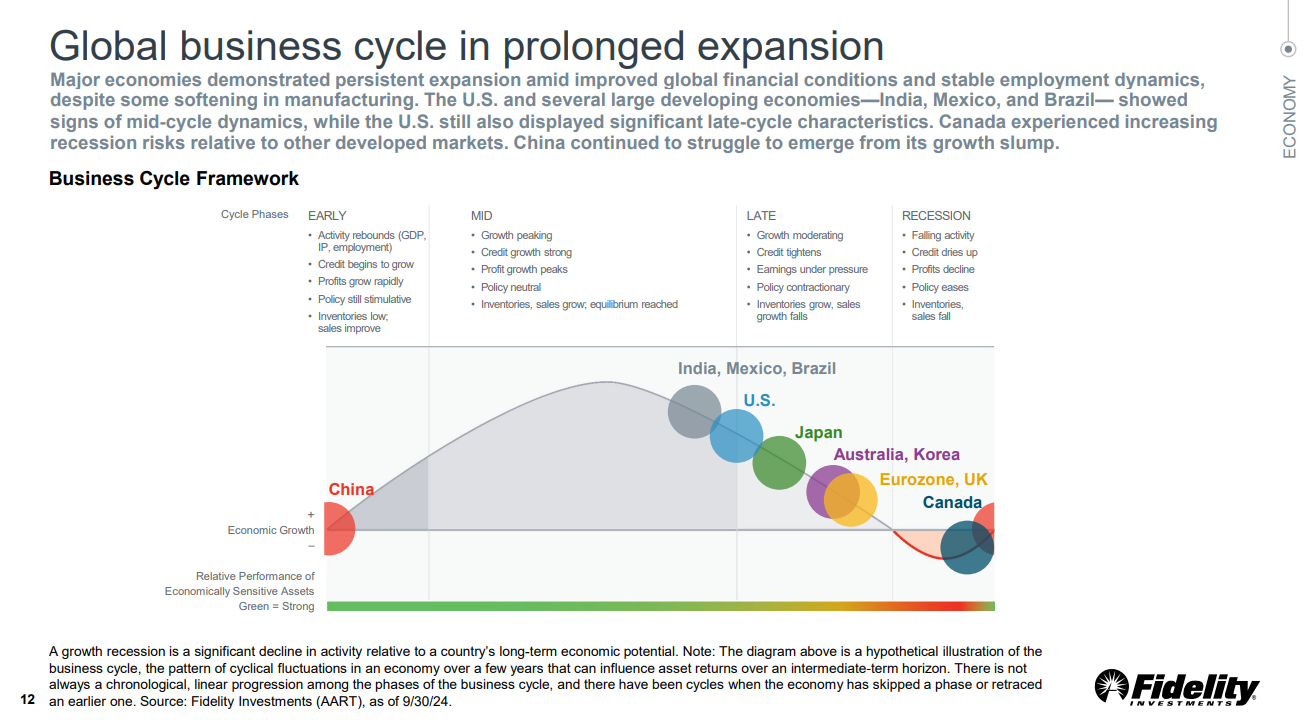
Russell Investments notes that the U.S. economy is showing more signs of a potential soft landing as inflation has cooled significantly, prompting the Federal Reserve to cut interest rates. While employment growth is slowing and unemployment has risen slightly, layoffs remain limited, suggesting the job market is adjusting without typical recessionary job losses. The Federal Reserve’s proactive rate cuts aim to maintain economic stability, though risks remain if consumer caution leads to reduced spending and increased layoffs.²

Asset Update

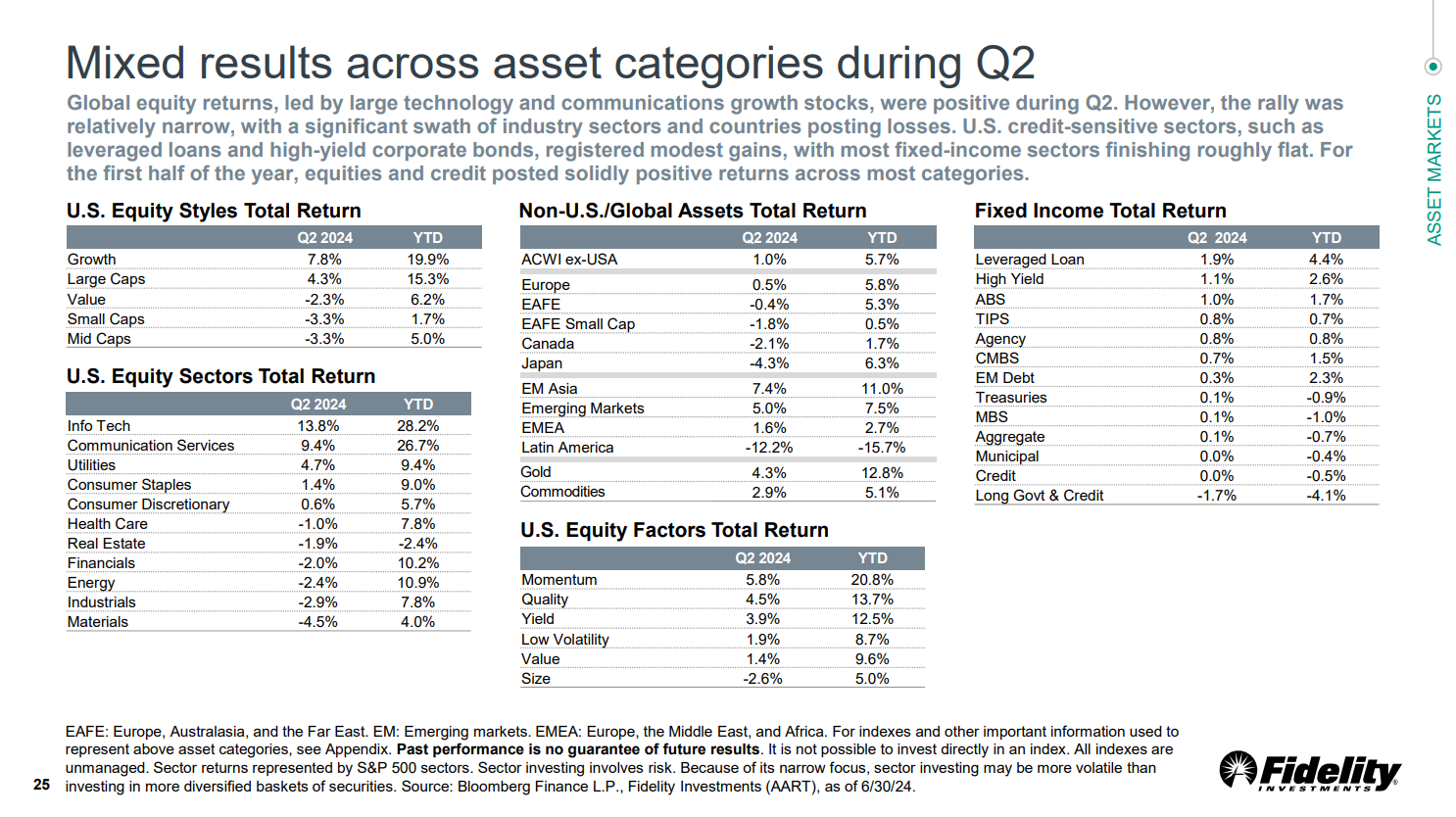
The S&P 500 delivered a 5.53% gain for the quarter, lifting its year-to-date (YTD) return to an impressive 20.81%³. Solid corporate fundamentals continue to support growth, with earnings expected to expand beyond just the largest companies.² Vanguard’s latest outlook reflects this with slightly adjusted long-term projections, lowering expectations for U.S. large-cap stocks while raising them for small-cap stocks over the next decade.⁴

Meanwhile, their 10-year fixed-income projections are offering returns similar to equities, but with less volatility, appealing to conservative investors.⁴ Still, Russell notes that recent drops in Treasury yields have brought them to fair value, prompting some portfolios to reduce their bond holdings.²

Since they believe equities are priced for a stable economic adjustment, the possibility of a tougher downturn adds some risk. They underscore the importance of maintaining diversified U.S. portfolios to manage potential market swings effectively.²

Hot Topic: Red or Blue
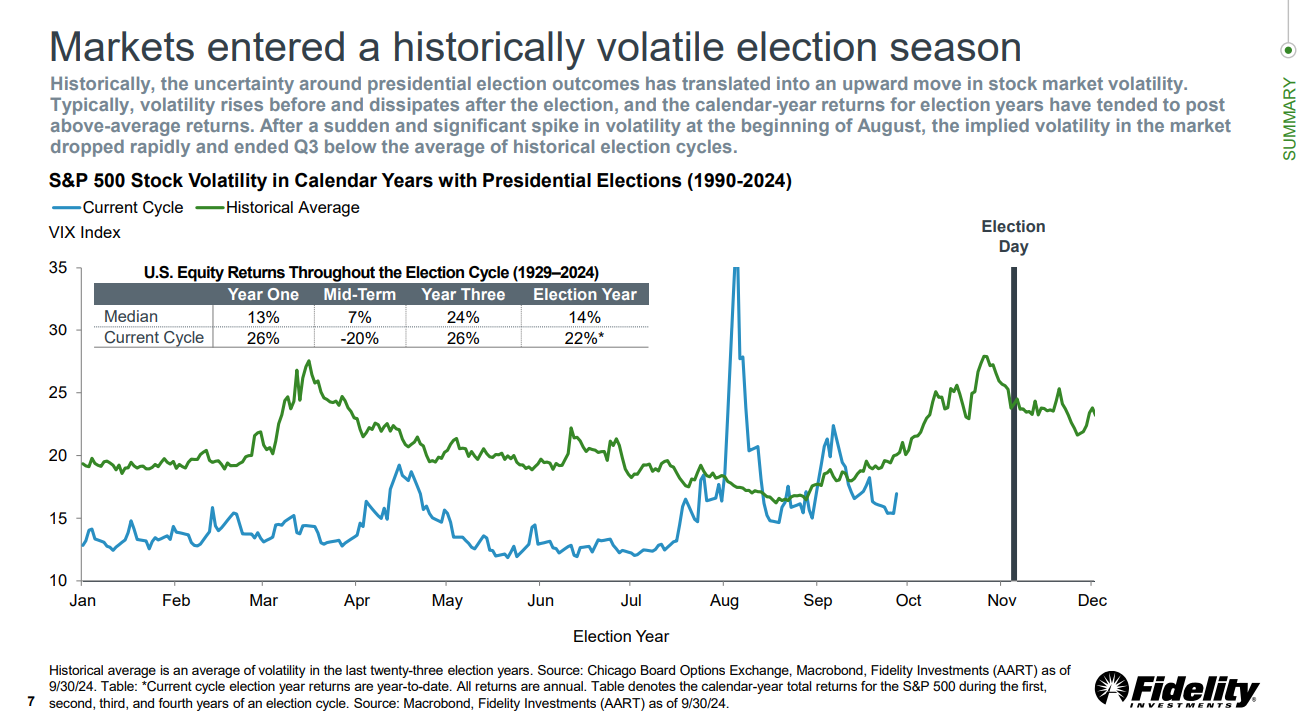
As the 2024 U.S. election approaches, investors can expect continued market volatility beyond typical business cycle uncertainties. Russell has highlighted that key economic risks to monitor include potential tariff increases, changes to corporate tax rates, and challenges to Federal Reserve independence. Despite these short-term concerns, they note that historical trends show that U.S. stocks have generally trended upward over the long term, regardless of which party controls the White House. Moreover, diversified portfolios have typically delivered positive returns in election years, a pattern expected to continue in 2024.² While political outcomes may create short-term market fluctuations, maintaining a well-balanced, diversified portfolio aligned with long-term financial goals remains a prudent strategy for navigating election-year uncertainties.

Summary

Photo by Luca Bravo on Unsplash

The Bank of Canada accelerated rate cuts last quarter, during increasing economic pressure for Canadians. In contrast, the U.S. has navigated its economic environment more effectively, offering greater stability and boosting confidence in U.S. assets, even amid higher valuations. As the U.S. election approaches, investors can expect continued market volatility. With this and the U.S. potentially positioned for a soft landing, diversification across asset classes and regions is essential to manage market volatility and shield against economic uncertainty.

We encourage you to connect with your financial advisor to ensure your portfolio aligns with your life stage and financial goals, enhancing resilience in an evolving market.

Sources:

[1] Bank of Canada Media Relations. (Oct. 23, 2024). Bank of Canada reduces policy rate by 50 basis points to 3¾%. https://www.bankofcanada.ca/2024/10/fad-press-release-2024-10-23/ 

[2] Russell Investments. (Accessed on Oct 29. 2024). Q4 2024 Global Market Outlook: DEFINITELY MAYBE.  https://russellinvestments.com/ca/global-market-outlook

[3] S&P Dow Jones Indices. (Oct. 2, 2024). U.S. Equities Market Attributes September 2024https://www.spglobal.com/spdji/en/commentary/article/us-equities-market-attributes  

[4] Vanguard Investment Strategy Group, global economics and markets team. (Oct. 22, 2024). Market perspectives. https://advisors.vanguard.com/insights/article/series/market-perspectives

[5] Fidelity Investments. (Accessed on Oct. 29, 2024). Quarterly Market Update: Fourth Quarter 2024. https://institutional.fidelity.com/app/literature/item/956327.html

The comments contained herein are a general discussion of certain issues intended as general information only and should not be relied upon as tax or legal advice. Please obtain independent professional advice, in the context of your particular circumstances. This article was written, designed and produced by Financial Literacy Counsel, a registered trade name with Investia Financial Services Inc., and does not necessarily reflect the opinion of Investia Financial Services Inc. The information contained in this article comes from sources we believe reliable, but we cannot guarantee its accuracy or reliability. The opinions expressed are based on an analysis and interpretation dating from the date of publication and are subject to change without notice. Furthermore, they do not constitute an offer or solicitation to buy or sell any securities.

Mutual Funds and ETFs are offered through Investia Financial Services Inc. Commissions, trailing commissions, management fees and expenses all may be associated with mutual fund investments.  Please read the prospectus before investing. Mutual funds are not guaranteed, their values change frequently, and past performance may not be repeated.

Clients

2024 Q3 Market Update

Photo by Andrea Cau on Unsplash


Stay informed with our latest update on economic trends and investment strategies. Discover the impact of the Bank of Canada’s rate cuts, get the latest economic updates from Canada and the U.S., and review recent asset performance.

Macro Update

¹

This past quarter, the Bank of Canada implemented two rate cuts, bringing its policy rate down to 4.5%. With a June inflation rate of 2.7%, they maintain expectations that Canada’s core inflation will decline to about 2.5% by the end of the year and reach its 2% target in 2025. The Bank’s decision to reduce the policy interest rate is due to easing broad inflationary pressures and excess supply, while acknowledging that high price pressures in shelter and services are keeping inflation elevated. Future monetary policy will be guided by ongoing assessments of these opposing inflationary forces, with a commitment to achieving price stability².

Russell Investments reiterated that a contraction of over 3% in per-capita GDP over the past two years indicates weaker economic health than headline GDP figures suggest. Additionally, The unemployment rate has risen from 5.4% to 6.2% over the past year. This increase reflects difficulties in absorbing the current influx of immigrants into the labour market³.

In the U.S., Vanguard reports that economic growth indicators, such as productivity gains and retail sales, are showing signs of slowing, leading them to anticipate 2024 GDP growth of around 2.0%. Despite recent favorable inflation readings, which have spurred market expectations of a Fed rate cut in September, Vanguard predicts that the Fed may only implement a modest rate cut in 2024 due to persistent high shelter inflation and a need to balance economic risks⁴.

¹

Asset Update

¹

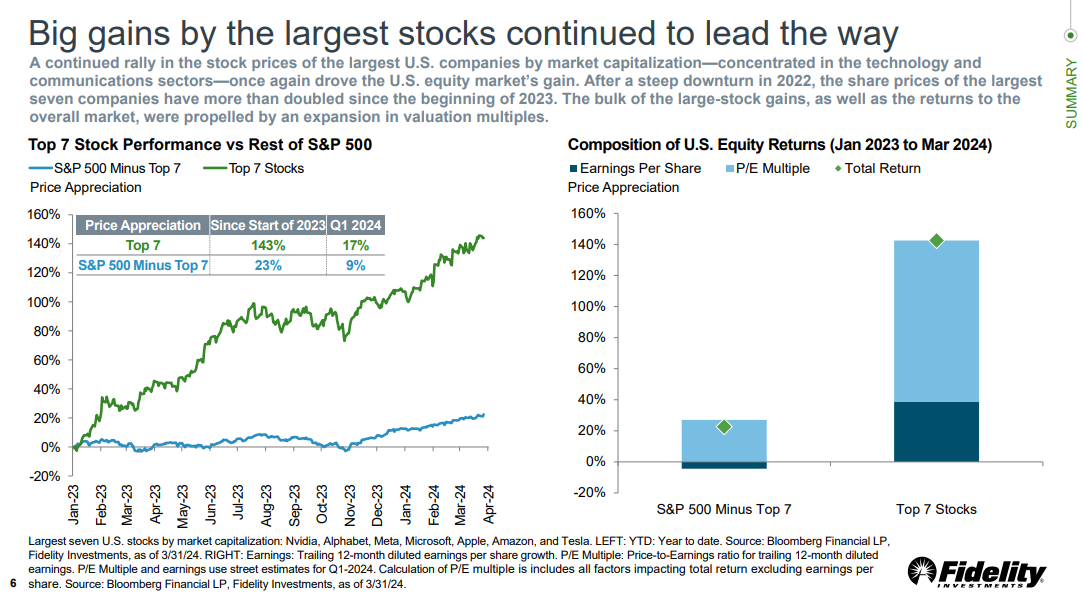
Last quarter we saw the S&P 500 start off with a slight dip, but managed to rally and end June with year-to-date returns at 14.48%⁵. Fidelity’s analysis echos its first quarter findings, showing that “Magnificent Seven” accounted for a 17% return, while the remaining 493 stocks were flat¹.

Vanguard’s updated 10 year projections show U.S. large-cap equities ranging from 3.2-5.2%, while small-cap and value have higher projections from 4.4%-6.8%, but carry more risk⁴. Though valuations may be attractive, Russell adds extra caution as they still believe there is a 35% recession risk in the U.S., which would have a stronger negative impact on small-cap companies³.

Similarly, Russell warns that current valuations of Canadian shares are reasonable, but economic concerns warrant a cautious stance. Despite improved earnings-per-share (EPS) growth estimates, potential downturns could harm corporate profitability. They believe that given the economic uncertainty and continued potential BoC rate cuts, government bonds are expected to perform well. They are seen as a safe investment, especially if a recession occurs³.

Summary

Photo by Javier Allegue Barros on Unsplash

The past quarter has been marked by significant economic adjustments, notably the Bank of Canada’s rate cuts. On the asset front, despite positive performance in major indices like the S&P 500, analysts recommend cautious optimism given the potential for economic downturns. As we have seen each quarter, the market is full of surprises and timing is challenging to predict. In this context, diversification is key to managing risk and seizing opportunities, helping investors navigate market volatility and adapt to changing economic conditions.

If you have any questions about how your portfolio is positioned or if you have had any major life changes, we encourage you to contact your advisor!


Sources:

[1] Fidelity Investments. (Jul. 2024). Quarterly Market Update: Third Quarter 2024. https://institutional.fidelity.com/app/literature/item/956327.html

[2] Bank of Canada Media Relations. (Jul. 24, 2024). Bank of Canada reduces policy rate by 25 basis points to 4½%.  https://www.bankofcanada.ca/2024/07/fad-press-release-2024-07-24/

[3] Russell Investments. (Jul. 2024). Q3 2024 Global Market Outlook: THREE-SCENARIO PROBLEM. https://russellinvestments.com/-/media/files/ca/en/insights/global-market-outlook/2024-q3-gmo-full-report.pdf

[4] Vanguard Investment Strategy Group, global economics and markets team. (Jul. 24, 2024). Market perspectives. https://advisors.vanguard.com/insights/article/series/market-perspectives#projected-returns

[5] S&P Dow Jones Indices. (Accessed on Jul. 26, 2024). S&P 500®https://www.spglobal.com/spdji/en/commentary/article/us-equities-market-attributes  

The comments contained herein are a general discussion of certain issues intended as general information only and should not be relied upon as tax or legal advice. Please obtain independent professional advice, in the context of your particular circumstances. This article was written, designed and produced by Financial Literacy Counsel, a registered trade name with Investia Financial Services Inc., and does not necessarily reflect the opinion of Investia Financial Services Inc. The information contained in this article comes from sources we believe reliable, but we cannot guarantee its accuracy or reliability. The opinions expressed are based on an analysis and interpretation dating from the date of publication and are subject to change without notice. Furthermore, they do not constitute an offer or solicitation to buy or sell any securities.

Mutual Funds and ETFs are offered through Investia Financial Services Inc. Commissions, trailing commissions, management fees and expenses all may be associated with mutual fund investments.  Please read the prospectus before investing. Mutual funds are not guaranteed, their values change frequently, and past performance may not be repeated.

Clients

2024 Q2 Market Update

Photo by Mike Benna on Unsplash


Get insights on economic trends and investment strategies with our latest update. Learn about the Bank of Canada’s inflation outlook, current market dynamics, and key highlights from the 2024 Federal Budget, including changes to the capital gains tax and the Home Buyers Plan.

Macro Update: Steady as she goes

¹

On April 10th, the Bank of Canada (BoC) opted to maintain its policy rate at 5%. They anticipate Consumer Price Index (CPI) inflation to hover around 3% in the first half of 2024 before moderating to below 2.5% in the latter half, ultimately reaching the 2% inflation target by 2025².

Russell Investments updated its Canadian recession estimation to occur within the next 12 to 18 months, pushing it into 2025. Immigration continues to bolster the overall economy, yet the current job creation rate doesn’t align with the influx of immigrants. Despite no official recession, GDP per capita has declined by 3.2% since the second quarter of 2022, which they suggest is a “standard-of-living recession”³. Higher debt levels and joblessness pose ongoing risks as indicators of soft demand persist in Canada, with slow sales growth particularly evident in sectors tied to discretionary consumption and residential real estate⁴.

In contrast, Vanguard’s view on the US economy appears more optimistic, with expected real economic growth of about 2.0% in 2024, surpassing their initial estimates of 0.5%. Shelter prices, a significant component of the core inflation, have increased by 5.7% year-over-year, contributing substantially to overall inflation⁵, similar to the current state in Canada.

Asset Update: Keeping the ship stocked

¹

The S&P 500 ended a strong first quarter above 10%, but has pulled back since then, with year-to-date returns at 6.33% as of April 24, 2024⁶. Fidelity’s analysis highlights a continued significant performance gap within the index: by the close of the quarter, the “Magnificent Seven” stocks appreciated by 17%, nearly doubling the broader S&P 500’s growth rate, which stood at 9%¹.

Shifting focus to portfolio strategies, Russell Investments has been prioritizing security selection and diversification to safeguard client outcomes amidst diverse scenarios anticipated in the coming year. While formerly favoring quality equities—companies with strong balance sheets and profitability—this preference was adjusted in February following a period of robust performance for these stocks³. Similarly, Vanguard suggests that though these equities are currently favorable, investors might contemplate maintaining some exposure to large-cap growth stocks. Many have thought these to be overbought, however, they may still have a runway for continued returns⁵. This underscores the value of a diversified portfolio for long-term growth.

Hot Topic: 2024 Federal Budget – is that an iceberg?

Photo by Tom Carnegie on Unsplash

Earlier this month, Canada’s Department of Finance presented the 2024 Federal Budget. By the next morning, many woke up to headlines surrounding the capital gains tax increase from 50% to 67%. The Department of Finance emphasized that this would primarily affect Canada’s highest income earners, as, for individuals, it only applies to amounts in excess of $250,000⁷. However, professionals who are incorporated or planning to incorporate will have to do a deeper dive into potential implications. There will also be greater considerations for estate planning and real estate investment properties.

Prior to the full budget release, the Finance Minister announced an update to the Home Buyers Plan. Canadians can now withdraw up to $60,000, a substantial increase from the previous limit of $35,000, from their tax-sheltered RRSP to facilitate first-time home purchases. This adjustment is expected to provide valuable assistance to those striving for homeownership. You can find additional details about this development on Investment Executive here⁸.

Summary

Photo by Javier Allegue Barros on Unsplash

As we navigate these economic shifts and policy changes together, it’s essential to conduct regular reviews of your financial plan. Remember to keep the principle of diversification top of mind in your investment strategy. Diversified portfolios not only help manage risks but also maximize growth opportunities over time, regardless of market fluctuations. If you’re uncertain about how the Federal Budget developments may affect your financial journey, we encourage you to reach out and connect with your advisor. Your financial well-being is our priority, and we’re here to provide personalized guidance and support tailored to your individual goals and concerns.


Sources:

[1] Fidelity Investments. (Apr. 2024). Quarterly Market Update: Second Quarter 2024. https://institutional.fidelity.com/app/literature/white-paper/9883196/second-quarter-2024-quarterly-market-update.html

[2] Bank of Canada Media Relations. (Apr. 10, 2024). Bank of Canada maintains policy rate, continues quantitative tightening. https://www.bankofcanada.ca/2024/04/fad-press-release-2024-04-10/

[3] Russell Investments. (Apr. 2024). Q2 2024 Global Market Outlook: PENT-UP EXUBERANCE. https://russellinvestments.com/-/media/files/ca/en/insights/global-market-outlook/2024-q2-gmo-full-report.pdf

[4] Bank of Canada. (Apr. 1, 2024). Business Outlook Survey—First Quarter of 2024. https://www.bankofcanada.ca/2024/04/business-outlook-survey-first-quarter-of-2024/

[5] Dziuba, R & Sheridan, M. (Mar. 22, 2024). Portfolio perspectives. https://advisors.vanguard.com/insights/article/series/market-perspectives

[6] S&P Dow Jones Indices. (Accessed on Apr. 24, 2024). S&P 500®https://www.spglobal.com/spdji/en/commentary/article/us-equities-market-attributes  

[7] Government of Canada. (Accessed on Apr. 25, 2024). Budget 2024: Chapter 8: Tax Fairness for Every Generation. https://www.budget.canada.ca/2024/report-rapport/chap8-en.html

[8] Mezzeta, R. (Apr. 11, 2024). Feds boost home buyers plan withdrawal limit to $60,000. https://www.budget.canada.ca/2024/report-rapport/chap8-en.html

The comments contained herein are a general discussion of certain issues intended as general information only and should not be relied upon as tax or legal advice. Please obtain independent professional advice, in the context of your particular circumstances. This article was written, designed and produced by Financial Literacy Counsel, a registered trade name with Investia Financial Services Inc., and does not necessarily reflect the opinion of Investia Financial Services Inc. The information contained in this article comes from sources we believe reliable, but we cannot guarantee its accuracy or reliability. The opinions expressed are based on an analysis and interpretation dating from the date of publication and are subject to change without notice. Furthermore, they do not constitute an offer or solicitation to buy or sell any securities.

Mutual Funds and ETFs are offered through Investia Financial Services Inc. Commissions, trailing commissions, management fees and expenses all may be associated with mutual fund investments.  Please read the prospectus before investing. Mutual funds are not guaranteed, their values change frequently, and past performance may not be repeated.

Clients

2024 Q1 Market Update

Photo by anthony maw on Unsplash


Join us as we explore the economic forecast and investment landscape, similar to checking the weather before stepping out. This quarter we navigate through the economic trends on inflation and interest rates, insights shaping financial climates, and the continued case for diversification.

Macro Update: Checking the Weather App

Much like forecasting the weather, forecasting the economy is an imperfect art. If they are at least directionally correct, we can rely on them for guidance on how to plan for the future.

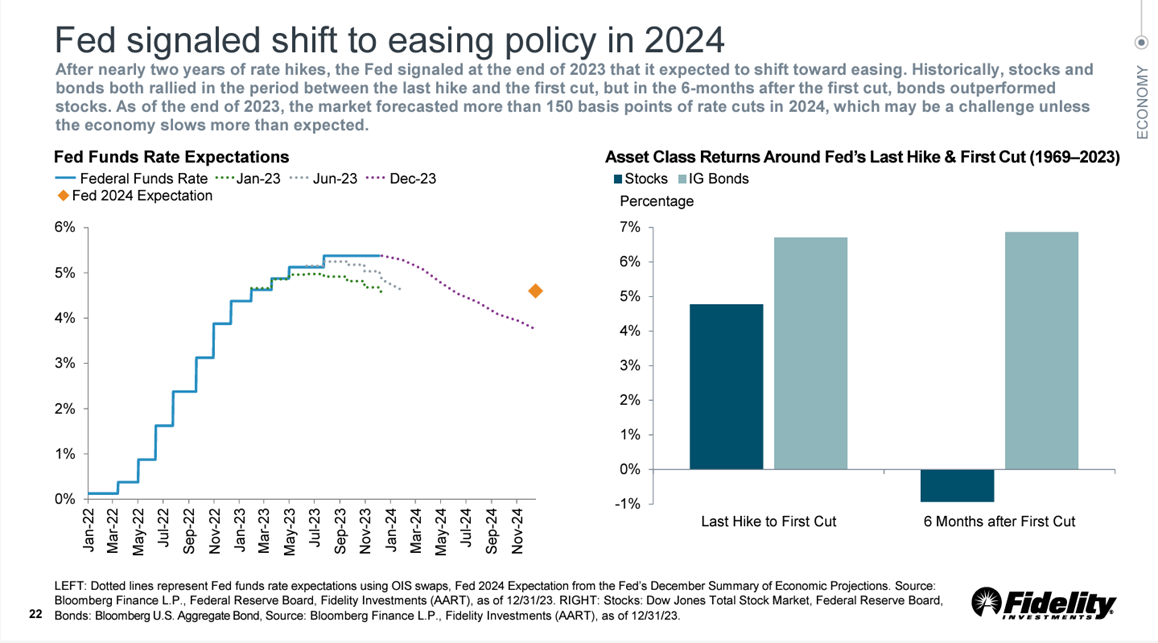
The Bank of Canada (BoC) maintained a 5% policy rate on January 24, 2024, aligning with their previous announcements in the latter half of 2023. They highlighted that wage growth and shelter costs continue to contribute to elevated rates. As the economic climate aligns with projections, the expectation is that inflation will remain at approximately 3% for the coming months, gradually tapering to around 2.5% by the end of the year. Given these positive developments, the BoC has shifted its discussions from assessing whether the policy is “restrictive enough” to deliberating “how long it needs to stay”¹. This signal reinforces the consensus that interest rates have likely reached their peak, contingent on the economy’s anticipated path. It follows a similar U.S. signal sent at the end of 2023².

Russell Investments underscores a Bank of America survey revealing that 74% of fund managers do not foresee a U.S. recession in 2024, a statistic they approach with caution, deeming it overly optimistic³. Conversely, Canadians are more keenly feeling the impact of prevailing interest rate levels. Both Russell and Vanguard investments anticipate a mild recession still in the Canadian forecast this year, with predictions of a series of rate cuts by the end of 2024³,⁴. This projection is welcomed news, creating anticipation of warmer days after a prolonged winter, especially as consumer confidence continues to experience a chilling effect.

Asset Update: (Not so) Surprise Snow

Vancouver experienced one of its most pleasant Decembers in recent years, characterized by minimal rain and abundant sunshine that created a deceptively comfortable atmosphere. However, January brought a change with a light dusting of snow, catching many residents off guard during their commutes.

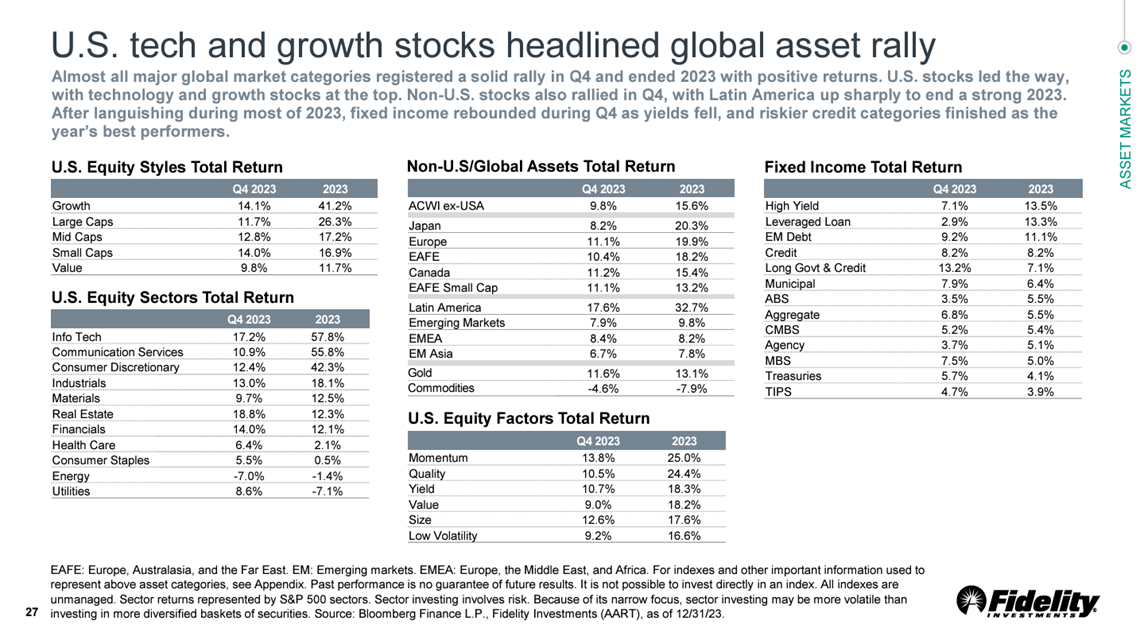
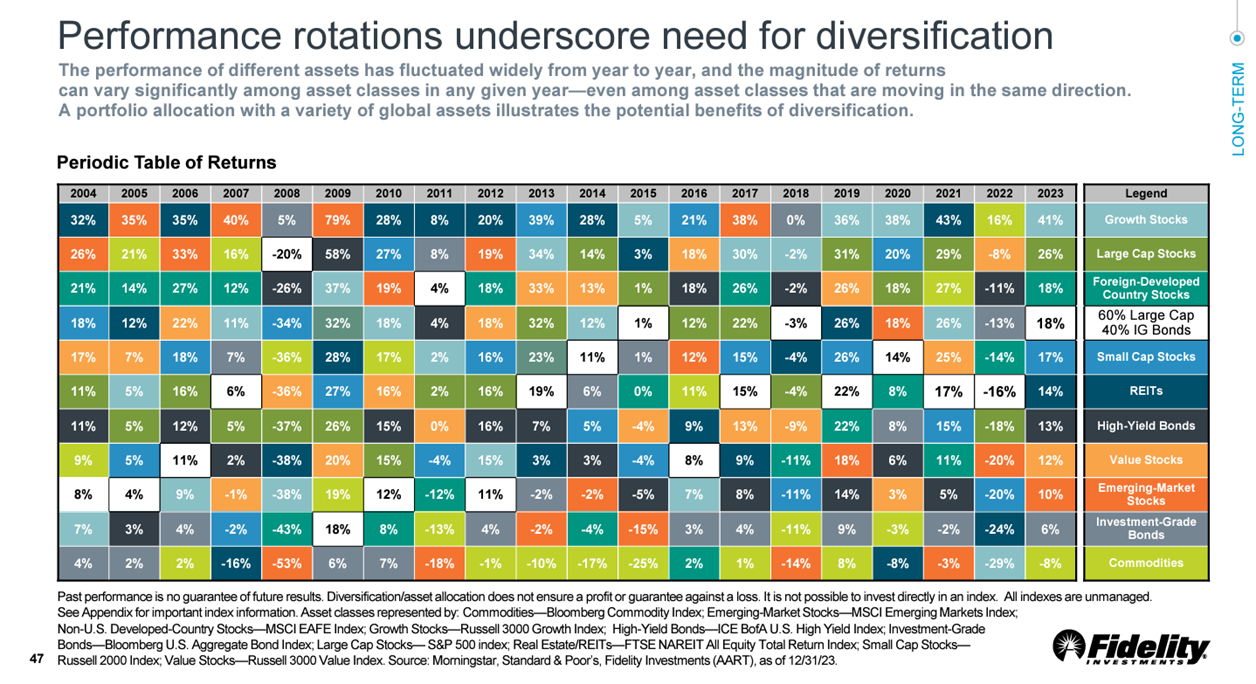
In the financial landscape, 2023 concluded positively for both stocks and fixed income, largely boosted by a robust performance in the final quarter². While the U.S. stock performance may tempt investors to concentrate on high-performing sectors such as growth and tech stocks, the team at Russell advises caution, highlighting that downside risk may outweigh the upside potential. Canadian equities boast a forward price-to-equity ratio of 12, appearing more attractive compared to the more expensive U.S. P/E of 18. This perceived value should also be shared with an acknowledgment that Canadian equities tend to be more cyclical and sensitive to economic downturns³.

Last quarter, we emphasized Vanguard’s perspective that projected fixed income returns fall within the band for U.S. equities, advocating for a diversified portfolio⁴. Given ongoing economic uncertainty and the understanding that fixed income prices typically ascend when interest rates decline, consider them to be your financial winter tires. In the event of an economic snowfall, they enhance your likelihood of reaching your financial destination unscathed.

Hot Topic: We can never be too careful…or can we?

“Rebalancing is a strategy of realigning your portfolio to your objectives and needs, which should be done at least once a year.”

– Bobby Ning, CFP and Co-Founder of FLC

In 2023, discomfort was prevalent, leading many investors to seek refuge in Guaranteed Investment Certificates (GICs) and High-Interest Savings Accounts (HISAs), offering a secure 5% return. While this approach proved effective for those with a shorter investment horizon, long-term investors may have foregone potential double-digit returns by avoiding a measured level of risk. As a gentle reminder, it’s prudent to schedule an annual review with your advisor. Rebalancing, the strategic realignment of your portfolio to align with your financial objectives, is a crucial exercise in restoring diversification. Additionally, your advisor may present alternative diversification opportunities for your excess cash that better align with your unique financial landscape, mirroring the adaptability required when navigating changing climates.
tions regarding your investments aligning with your long-term plan, it’s advisable to consult your financial advisor.
 

Summary

Photo by Ruben. on Unsplash

Much like checking a weather app, forecasting the economy offers imperfect yet directional insights. The Bank of Canada’s stable policy rate signals a projected economic trajectory, akin to anticipating shifting seasons. Contrasting sentiments between Canadian caution and U.S. optimism echo weather forecasts in different regions, emphasizing the need for diversified portfolios as protective measures. We strongly encourage you to reach out to your advisor if you have any questions about your current portfolio. Strategic realignments, like rebalancing portfolios, underscore the value of annual reviews, ensuring readiness for whatever financial weather lies ahead.


Sources:

[1]Macklem, Tiff. (Jan. 24, 2024). Monetary Policy Report Press Conference Opening Statementhttps://www.bankofcanada.ca/2024/01/opening-statement-2024-01-24/

[2] Fidelity Investments. (Jan. 2024). Quarterly Market Update: First Quarter 2024https://institutional.fidelity.com/app/proxy/content?literatureURL=/956327.PDF

[3] Russell Investments. (Jan. 2024). 2024 Annual Global Market Outlook: THE TWILIGHT ZONE. https://russellinvestments.com/-/media/files/ca/en/insights/global-market-outlook/2024-q1-gmo-summary_ca.pdf

[4] Vanguard Investment Strategy Group. (Jan. 19, 2024). Monthly outlook: Our investment and economic outlook, January 2024https://corporate.vanguard.com/content/corporatesite/us/en/corp/articles/investment-economic-outlook-jan-2024.html

The comments contained herein are a general discussion of certain issues intended as general information only and should not be relied upon as tax or legal advice. Please obtain independent professional advice, in the context of your particular circumstances. This article was written, designed and produced by Financial Literacy Counsel, a registered trade name with Investia Financial Services Inc., and does not necessarily reflect the opinion of Investia Financial Services Inc. The information contained in this article comes from sources we believe reliable, but we cannot guarantee its accuracy or reliability. The opinions expressed are based on an analysis and interpretation dating from the date of publication and are subject to change without notice. Furthermore, they do not constitute an offer or solicitation to buy or sell any securities.

Mutual Funds and ETFs are offered through Investia Financial Services Inc. Commissions, trailing commissions, management fees and expenses all may be associated with mutual fund investments.  Please read the prospectus before investing. Mutual funds are not guaranteed, their values change frequently, and past performance may not be repeated.

Privacy Settings
We use cookies to enhance your experience while using our website. If you are using our Services via a browser you can restrict, block or remove cookies through your web browser settings. We also use content and scripts from third parties that may use tracking technologies. You can selectively provide your consent below to allow such third party embeds. For complete information about the cookies we use, data we collect and how we process them, please check our Privacy Policy
Youtube
Consent to display content from - Youtube
Vimeo
Consent to display content from - Vimeo
Google Maps
Consent to display content from - Google
Spotify
Consent to display content from - Spotify
Sound Cloud
Consent to display content from - Sound
BOOK AN APPOINTMENT